
Easy
timer10 min
General Science Practice Quiz
Physics, chemistry and biology general knowledge for competitive exams.
help10 questions
gradingAuto scored
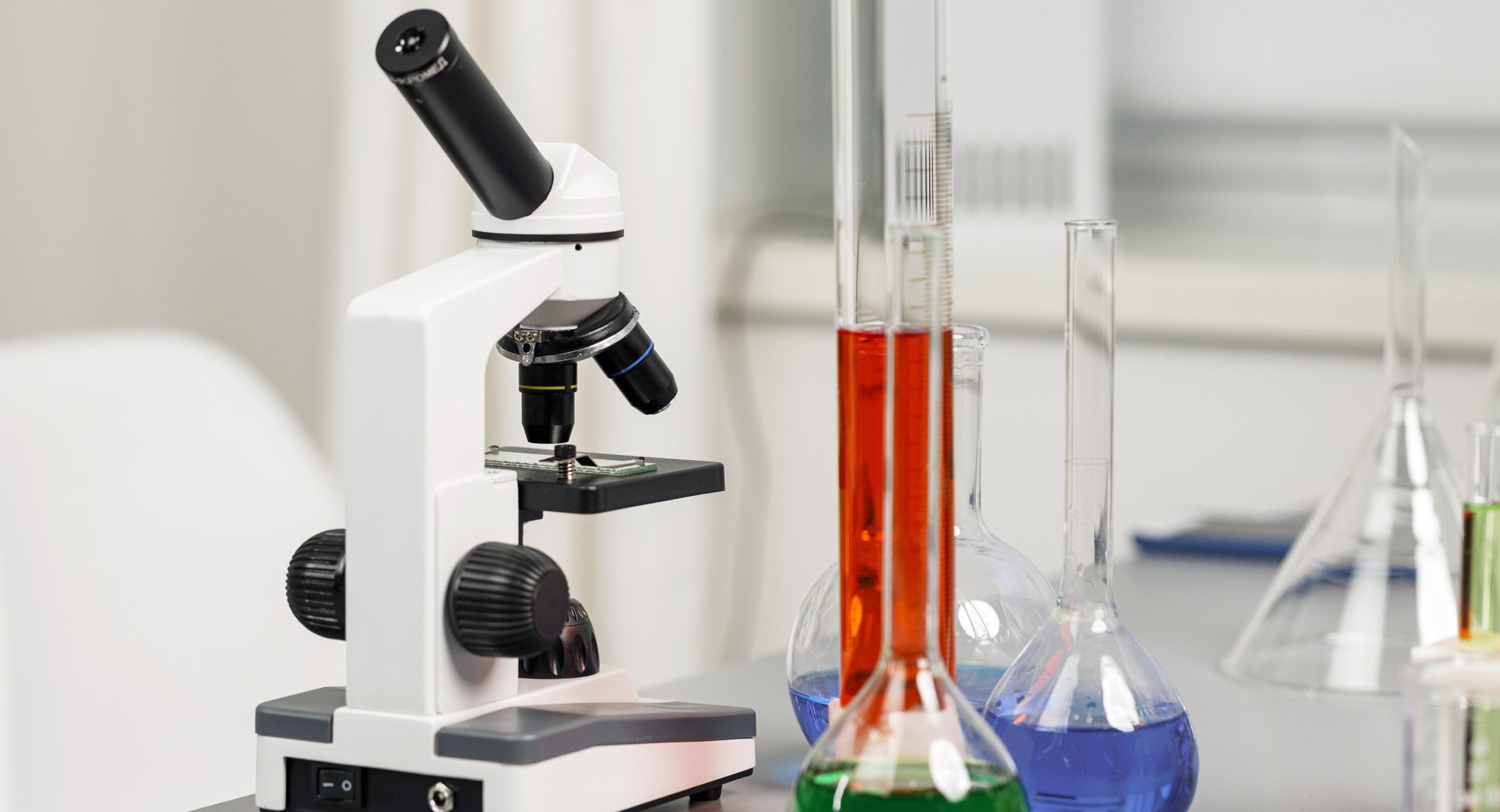
General Science is one of the most scoring parts of almost every Indian competitive exam. It covers basic Physics, Chemistry and Biology at the school level (roughly Class 6 to 10 NCERT), plus a bit of science and technology from current af
Pick a set, beat the timer and get scored at once. Then open your answer sheet and check the leaderboard. Every quiz here is a real set you can take.
Physics, chemistry and biology general knowledge for competitive exams.
Practice set with auto scored questions and a leaderboard.
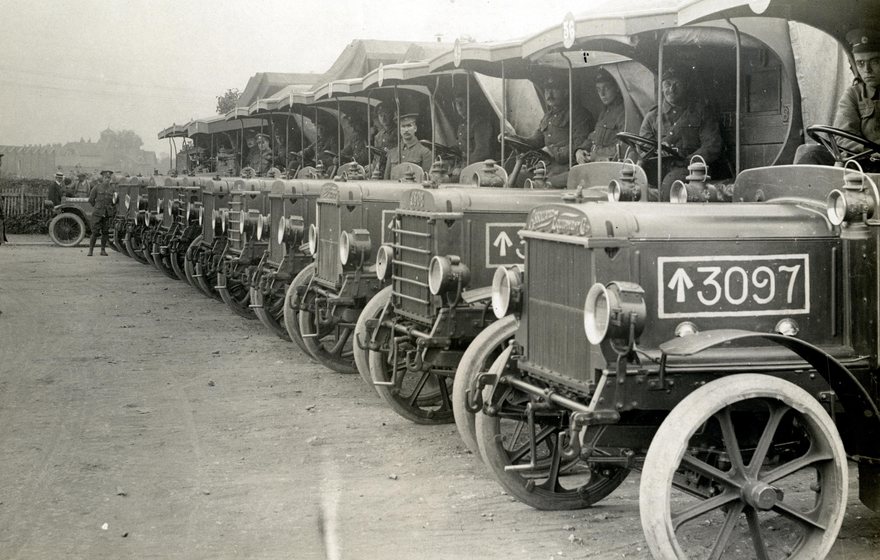
Do you know who invented some of the things we use everyday? Choose the correct answers on this quiz to find out.
Do you know who invented some of the things we use everyday? Choose the correct answers on this quiz to find out.
Read this in plain English, then take the quizzes above. Free to read, no login needed.
General Science is one of the most scoring parts of almost every Indian competitive exam. It covers basic Physics, Chemistry and Biology at the school level (roughly Class 6 to 10 NCERT), plus a bit of science and technology from current affairs. You do not need deep theory here. Most questions are short, fact based and ask about one clear point, like a unit, a chemical formula, a vitamin or a body part.
This page brings the most asked General Science topics into one simple place and turns them into free Quizzory practice quizzes. The idea is plain. The more clear facts you revise and test yourself on, the faster you can lock in easy marks on exam day. Read the short notes below, then attempt the quizzes to check what you really remember.
Units are the easiest marks in Physics. Exams love to ask the SI unit of a quantity. Force is measured in newton (N), pressure in pascal (Pa), energy and work in joule (J), and power in watt (W). The basic SI units you must know are metre (m) for length, kilogram (kg) for mass, second (s) for time and kelvin (K) for temperature.
Learn these as simple pairs so you do not mix them up. A common trap is to swap the unit of power and energy, or to forget that pressure is force divided by area. Keep a small list of quantity and its unit, revise it daily, and most unit questions become quick wins.
Motion questions test speed, velocity and acceleration. Speed is distance over time. Newton's three laws of motion are a favourite area, so know each one in simple words and one daily life example.
Light gives easy questions on reflection, refraction and the working of a mirror or lens. Remember that light travels in a straight line and its speed in vacuum is about 3 lakh kilometres per second (3 x 10 to the power 8 metres per second).
In electricity, the basics matter most. Current is measured in ampere (A), voltage in volt (V) and resistance in ohm. Ohm's law links them. Also know that a fuse protects a circuit and that copper is a good conductor while rubber is an insulator.
This section asks about the building blocks of matter. An atom has protons and neutrons in the centre (the nucleus) and electrons moving around it. The number of protons is the atomic number, which fixes the element.
Know common symbols and a few firsts. Hydrogen is the lightest element and the first in the periodic table. Oxygen supports burning and is needed for breathing. Carbon is the base of all living things. Metals like iron, copper and aluminium versus non metals like sulphur and oxygen is another simple compare and contrast that exams use.
Acids taste sour and bases taste bitter and feel soapy. Litmus paper is the simple test. Acid turns blue litmus red, and base turns red litmus blue. The pH scale runs from 0 to 14, where 7 is neutral, below 7 is acidic and above 7 is basic.
Everyday acids are very common in exams. Lemon and orange have citric acid, vinegar has acetic acid, curd has lactic acid, and our stomach uses hydrochloric acid to digest food.
Common compounds and their formulas are also asked. Table salt is sodium chloride (NaCl), baking soda is sodium bicarbonate (NaHCO3), washing soda is sodium carbonate (Na2CO3), and quicklime is calcium oxide (CaO). Learn the everyday name and the formula together.
The human body section is the most asked area in many exams. An adult human body has about 206 bones. The skin is the largest organ, and the stapes in the ear is the smallest bone. Blood is slightly basic with a pH around 7.4, and red blood cells carry oxygen using a protein called haemoglobin.
The cell is the basic unit of life. The nucleus controls the cell and mitochondria are called the powerhouse of the cell because they release energy.
Nutrition questions focus on vitamins and balanced diet. Each vitamin has a deficiency disease, so it is easy to test. Carbohydrates give energy, proteins build the body, and fats store energy. A simple table of nutrient, source and use is enough for most questions.
A few General Science questions come from recent science news, mostly about India's space and research work. ISRO is a big source. Chandrayaan 3 made India land near the south pole region of the Moon, and Aditya L1 is India's first solar mission, placed near a point called L1 about 1.5 million kilometres from Earth to study the Sun.
Also keep an eye on health and tech topics in the news, like vaccines, new satellites and missions. For these, you do not need depth. Just know the name of the mission or discovery, what it is for, and the agency or country behind it. Revising one line per recent item is enough to handle these questions.
General Science appears in the General Awareness or General Studies section of almost every major exam, including SSC (CGL, CHSL, MTS, GD), RRB (NTPC, Group D, ALP), bank exams and many state level exams (PSC and police). In SSC CGL Tier 1 alone, roughly 7 to 10 questions usually come from Physics, Chemistry and Biology together, with Biology often having the highest share. The level is basic (Class 6 to 10 NCERT) and the questions are short and fact based, so with steady revision this becomes one of the most scoring and time saving parts of the paper.

India's top competitive exams, UPSC, SSC, NEET, JEE, CAT, Banking and Defence: who conducts them, what they unlock, that every aspirant should know.

Extra practice for your exam, auto scored with a leaderboard.

Extra practice for your exam, auto scored with a leaderboard.
Teach a batch? Make your own quiz on Quizzory in minutes. Add MCQ, short answer or long answer questions, set a timer that auto submits, and share it with one WhatsApp link. MCQs are scored automatically. Every student sees a percent score and an answer sheet, and a leaderboard ranks the batch by score then speed. You sign in with a free SurveyHeart account to create. Students need no login to attempt.
addCreate a QuizYes. Every quiz here is free to attempt. There is no fee and no hidden charge to practise as many times as you want.
No login is needed to attempt a quiz. You can just open a quiz and start. A free SurveyHeart account is only needed if you want to create your own quiz, not to attempt one.
The quizzes are multiple choice (MCQs) and are scored automatically. You get your result right after you finish, so there is no waiting and no manual checking.
No. There is no negative marking in these quizzes. A wrong answer does not cut your marks, so you can attempt every question without fear and test what you really know.
The leaderboard does not update live. It updates when the page is refreshed, so refresh the page to see the latest ranks and scores after an attempt.
Yes. You can share any quiz with one tap on WhatsApp. This makes it easy to send practice quizzes to your study group and revise together.